A review of the fundamentals of chronic kidney failure treatment in a scientific paper published by the head of the Pharmacology and Toxicology branch.
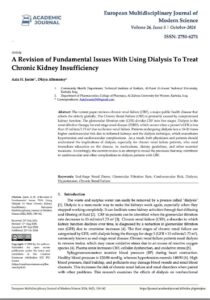
The head of the Pharmacology and Toxicology Branch at the College of Pharmacy, Al-Zahraa University for Women, Assistant Professor Dr. Diaa Rahim Al-Tamimi, published his scientific research entitled
The head of the Pharmacology and Toxicology Branch at the College of Pharmacy, Al-Zahraa University for Women, Assistant Professor Dr. Diaa Rahim Al-Tamimi, published his scientific research right
في (European Multidisciplinary Journal of Modern Science)، وهي مجلة علمية مصنفة ضمن مستوعبات سكوبس (Scopus) وفي الربع الرابع (Q4).
The research paper highlights chronic kidney disease (CRF) as one of the most prominent health conditions affecting the elderly globally, resulting from impaired kidney function. The study reviews the five stages of glomerular filtration rate (GFR) decline, explaining that dialysis is the most effective treatment in end-stage renal disease (ESRD), where the GFR is less than 15 ml/min/1.73 m².
Al-Tamimi pointed out that kidney dialysis patients face cardiovascular risks that are ten to twenty times higher than normal, due to infections and the challenges of dialysis technology, which leads to an exacerbation of high blood pressure and heart complications.
The study called for raising awareness among doctors and patients about the effects of kidney dialysis, and the importance of medical education related to medications, diet, and preventive measures.
This scientific review represents a qualitative addition to the field of kidney disease research, as it seeks to uncover the biological processes that contribute to cardiovascular complications in patients undergoing dialysis.